|















|
|

| In the horror realm you're often
connected with the work of Tobe Hooper, even
since the 60s, how did you two originally
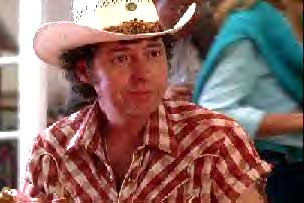
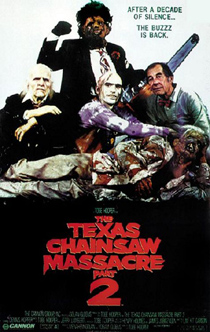
connect? In the early 60's I was in the army at Ft. Hood just north of Austin . My brother Ron and Tobe were good friends, as they were the only young guys in Austin making films. I would come down to Austin on weekends to see them and hang out. During those visits I got to visit and help out on the set of "The Heisters" and a lot of other things. After I got out of the Army I started working around whatever films I could and eventually worked pretty steady on all kinds of stuff, camera assistant, running sound, and doing a little camera work. Tobe and I even used to go out on camera shoots in his MGB, a very small car. We would have to pack everything in the trunk and back seat, camera, recorder, lights, cables, everything. At that time you were working behind the camera --- what did you learn from your years as a cinematographer that came in handy when it was time to get in front of the camera? I learned how important communication was between the director and the actors. And I learned that the camera people were generally trying hard to get it right, and if you are screwing up and missing your marks, or flubbing your lines, then everybody has to do it over, everybody. But mostly, I understood that you are playing in the frame with all the other characters and that you can be aware of sort of the choreography of the frame. You were assistant cameraman for 'The Texas Chainsaw Massacre' (1973). Did you realize when making the film that you were somehow involved in a landmark in the new era of horror? It was impossible to know that it was any kind of landmark of horror films, and some of the shooting conditions were so terrible that you wondered what you were doing there, but I do remember particularly that when we first saw Leatherface and he killed the Bill Vail character (Curt? Kirk?) that it scared the hell out of everybody on the set! We just streamed out of the house screaming and hollering! That’s when I knew we were doing something completely different! You appeared as an actor in the role of L.G. McPeters in 'The Texas Chainsaw Massacre II'. Was there any hesitation on your part not to become too associated with the work of Mr. Hooper, especially after appearing in 'Poltergeist' as well? Well, when I started out to become an actor, I did that on my own. I felt that my being an actor didn't really have a lot to do with Tobe, except that he had been pretty much an inspiration to me, and I learned a lot from him. I met a guy named Eagle Pennell and we started making films together. I liked him and I liked the films we were making. They were films about the kind of people we knew. We made a short and two features on miniscule budgets, and unfortunately, we didn't plumb the depths of what we knew and didn't continue making those films. A friend of ours named Mark Rance is working on restoring those films for a release on DVD. I also want to know, regarding The TCM 2 role...how was the process of being skinned alive? What exactly do you remember from that horrific film demise? The way I remember it, one night I got a call from Tobe, and Kit Carson was on the line, and after they told me they were going to do the sequel, Tobe said "Hey man, we're going to skin you alive!" Well, of course I said, "Great, when do we shoot this?" Of course in the film, I get pounded by the gang with a hammer and then when I wake up my face is all gone. Tom Savini and his special effects crew did a nearly full body cast of me, upon which they built what they called the "appliances" that made me look as if I had been skinned. (I still have the bust of myself out on the porch.) I went in to the makeup department around 2 A.M. the day of the shoot and Tom had built a slant board that I could lie on while they made me up and I went to sleep and woke up with all the make up. One of the funniest things that happened on the way from the makeup studio to the set. I was dressed in those boxer shorts and was riding in this van without window tinting. We were stopped at a light and I saw all these people in the next car staring at me and laughing and pointing, so I rolled the window down and said "Road rash! This is what happens when you don't wear your leathers when you take your motorcycle out for a ride!" Do you believe in poltergeists and ghosts? Not particularly. Don't get me wrong, I've been spooked and I've had the hair on my neck stand up in a bunch of different circumstances, but I was always too busy surviving whatever situation I was in to be trying to figure out if there was something supernatural going on. I figure the causes of your problems may be supernatural, but the solutions are always practical. Your first starring role as an actor was in 'The Tomato That Ate Cleveland' in 1974. What was that experience like? Especially starting off your acting career in such a wild film? Yeah, that was my first film as an actor. I learned a lot, mostly about what not to do on camera. Like upstaging other actors! I really hadn't acted in anything at all, and I did not know what I was doing. In retrospect, "Tomato" was part of the wonderful tradition that was getting started in Austin that you could just go out and make your film, learn from it and try to do better next time. Also tell me a little bit about your 1988 thriller 'The Cellar'. It's hard to say only a little bit about "The Cellar". My friend John Woodward wrote that, and worked on it through many, many drafts and turned out what I thought was a cute, sexy thriller. He was a great acting teacher and I studied with him for a good while, and when he got the money he asked me to come out to Tucson and do the part we had worked on together for so long. Unfortunately, the producers fired John during the first week and it was a mess. It was a perfect example of what not to do to get your film produced. I probably can't say any more without getting sued. You also frequent the convention circuit (Cinema Wasteland Weekend, Texas Frightmare Weekend, etc). What is that experience like -- fan-tastic -- fan-atics? Cinema Wasteland was my first show and I didn’t know what to expect. The fans were simply amazing. I never had any idea so many people knew me from TCSM 2. I made a lot of friends and hope to meet a lot more. In
that venue is there a lot of horror networking
going on behind the tables for roles and whatnot? |