|














 |
|
|

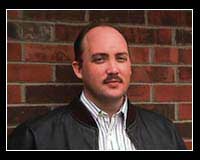
Owen: So do you feel your horror movie career was somewhat destined with being born on "Friday the 13th"? Tim: It very well could have been. It was a full moon that night too, and I'm told that I used to howl at the moon in my crib when I first saw it as an infant... Owen: You directed and edited your first feature movie, 'Day of the Reaper' (1984), at age 17. Do you see constants between the format and execution of that film and the way you direct today? Tim: Generally speaking, yes, in terms of getting all the shots you can in a limited amount of time and battling things like temperamental actors and bad weather. But I was just starting out then and although I was reading books on writing scripts and directing, I didn't have the knowledge and experience that I do now. It was a "learn by doing" type of thing, really, all happening before the eyes of the public as each movie was released, which has pros and cons. An expensive learning process too, as super-8 film was like $12 a roll...for 3.5 minutes of footage! Even though I was a pretty bad director then (not that I'm so great now!), it was a great learning experience. With 'Reaper' I started learning how to communicate with actors, work with effects, cheat shots, and the whole nine yards. I don't think I had a firm grasp on shooting and editing and how they really could work together, that took up through 'Truth Or Dare---A Critical Madness.'
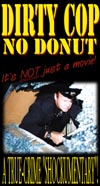
Tim: With 'Creep' I was working with several producers and once the movie neared completion, their job and focus was trying to make money off the thing. But the movie turned out so bizarre, I think, in terms of subject matter and the way it all came across...that it either alienated viewers or turned them off. It just wasn't a pleasant movie, even if parts of it were Z-grade cheese due to the small budget. ‘Creep’ was inspired from that whole era of 'Natural Born Killers' and 'Henry: Portrait of a Serial Killer' type of movies. Back then, I was an angry young man, obsessed with authors like Jack Ketchum, Richard Laymon, and Stephen King. There were two original cuts, one that was for the Blockbuster market (which didn't pan out too well anyway in terms of sales) and one that was for the niche market crowd who liked really sleazy movies. Ultimately, even the niche market crowd was kind of disappointed because I felt we went too far with some things and pre-publicity pictures were published in magazines that we had cut from even the harder cut of the movie...So cut to a few years later and due to viewer demand, the producers released another version with some of the things we initially cut out, and it did okay, although by then we had been ripped off so badly by various middlemen and wholesale distributors that the financial damage was irrevocable. The DVD version was a mixture of the first and third cuts, but to this day, there has never been a "full-on" edition released with some of the stuff that went too far (killings, bloody aftermath shots, and loads of Jess Franco-style material). Hopefully there won't ever be, honestly! But the biggest distribution problems were wholesalers ripping us off and just the looney 'tone' of the movie, there were no heroes to root for, it was depressing, and (SPOILER HERE) everyone simply died at the end. It's just a hard movie to watch. Tim: Speaking of controversy, you're also the notorious director of the "Officer Friendly" parody films of police reality shows'- 'Dirty Cop, No Donut' (1998) and the sequel 'Dirty Cop, No Donut 2: I am a Pig' (2000). What has been the response from real officers? Has it been more an appreciation for the humor or are they pissed off to be mocked? Tim: Notorious! I like that, it sounds like a Duran-Duran song! (laughs) Most of the police officers who saw the original got a good chuckle from it. When the big 'twist' happens in the movie, it becomes clear that we weren't trying to make a statement on real police officers and the work they do. It was simply a plot device for us to do that 'shockumentary' type of thing and it cost us virtually nothing to do it, which was why I chose the police slant of the story. We weren't even going to release the original 'Dirty Cop'---it was originally done just as a showcase idea for some investors so they could see what we wanted to do. But we ended up shooting enough footage for an 80-minute showpiece and when the investors disappeared (as they always seem to do!), we ended up hooking the movie together and releasing it. I've always been a big fan of the 'Dirty Harry' movies, so 'Dirty Cop' was meant to salute those in many ways, with the cop smashing up the drunk driver's car and really going ballistic on a domestic dispute and dishing out his own brand of justice on a rapist. Part 2 was a collaboration with filmmakers Donald Farmer, Bill Cassinelli, and Joel Wynkoop, so that one ended up being a little more fetish-like, unfocused and all over the board---and ultimately, just not as much fun as the original. It pretty much came out with a whimper and died a quick, quiet death. Similarly to 'Creep', we cut a lot of stuff out of that because we thought it went too far...I cover that pretty well in my book ‘Unreel’… Owen: You shot the serial killer movie 'Truth or Dare? A Critical Madness' right out of high school with some major financial backing. You've mentioned in other interviews that having the responsibility for a $200,000 assignment at that age was like "crash course film school". What were the main things you learned from the experience? Tim: Production, A-Z, really! (laughs) With 'Truth Or Dare?', I learned all about casting, storyboards, script breakdowns, finding close locations, working with stunt crews, wardrobe departments and just all the things they teach you in film school that indie filmmakers usually do for themselves. There's actually departments of people to help out throughout the whole process, which was a big shock. Then there was dealing with all the investors and some very 'creative' producers who kept trying to change everything I was doing while we made the movie, which was really annoying. At times, it was glorious fun, and at times, it was like living a dream turned into the worst nightmare that one could imagine. I also learned that even with a larger budget behind you, it's still 'improvise and adapt' in terms of making these things---even the departments hired can let you down and the creator has to be prepared to do everything yourself with a backup plan--- even when you're paying people. That was probably the biggest shock! The people aspect was also incredible, seeing how egos and human nature caused our tight little group of collaborators into this whole he said/she said 'betrayal' and 'self-destruction' mode...In the end, everyone seemed to have an agenda that was contrary of the original goal, which had been to make the best movie we could with ‘30 new special effects that had never been seen before!.’ That was the way ‘Truth Or Dare’ was advertised in Variety while we were shooting it and losing that focus was the most frustrating part of the whole experience, I believe. Ironically, nearly the same thing happened when we made ‘Killing Spree’ a year or so later! (laughs) The chaos behind the scenes is sometimes more insane than the rampage the killer is performing on the screen! Owen: That also kind of keys in to another common element in your films -- "the rampage". What about that appeals to and/or intrigues you? Tim: I think it's a reflection of life, really, something that scares us all. 'What if a psycho comes into the burger joint and starts wasting everyone with an Uzi while you're just up at the counter trying to order some artery-clogging food?' A lot of the elements I put in my little slasher movies were inspired by two things: the movies and novels I enjoyed growing up and things I saw happening in real life around me. Lots of the 'rampage' sequences in 'Truth Or Dare' were taken from real incidents I had seen covered in the news: people getting shot while waiting for a bus, a kid leaving a baseball game being gunned down while he walked home, and on it goes. The same goes for 'Killing Spree'---the whole decapitated head scene was inspired by a real incident in West Palm Beach where this guy cut off his girlfriend's head and was walking down the street with it in the middle of downtown---in broad daylight, holding it like a bowling ball! Police arrived, and he threw the head at them! I was seeing all this in the news and putting it all into my movies probably just as a way to deal with my own fears in a way where I could actually control it---in a fantasy environment. So the rampage offered me two things as a filmmaker- it's something that is unexpected and scary that any of us might have to deal with at any time (and my how it's escalated with all the horrible terrorist crimes) and it's also a way to keep a low budget movie going, adding a tempo of 'action' to the proceedings. There's so many ways to cut and edit 'rampage' scenes---fast cuts, slow cuts, playing with music, sound effects, character perceptions, and on and on it goes. And it's still something that you can do as a filmmaker very economically, the scene is made entirely in the editing room... Owen: So with films like 'Truth or Dare', 'Killing Spree', 'Creep', 'Wicked Games', etc. is there some specific killing sequence from one of your films that you think represents the pinnacle for your work? Tim: I'm not sure. I know when I started out, my goal was to push the envelope and just go for the jugular, staying as crazed and uncensored as possible. I would say each movie has a little sequence it's known for. With 'Killing Spree', I'd say it's the gal's giant lips going over her lover's head (a scene where all the buyers at the Cannes Film Festival walked out!) and then the 'remove the jaw with the claw hammer' murder. In 'Wicked Games', I'd say the gore highlight is the victim falling onto the sprinkler and then having it come on to jettison gallons of blood all over the place. With 'Creep', I'd say the whole 'cemetery raid' scene is just very creepy in tone and the gore scene that stands out is where Kathy Willets kills a photographer with a farm auger and then slurps down on his bloody tongue. In 'Truth Or Dare', the one thing the movie is usually remembered for is the scene where the killer deliberately mows down a baby stroller with his car, then backs up over the mother as a final insult. It was written even crazier and meant to be filmed showing the killer swerving directly into the carriage, but I remember the producers got cold feet on the afternoon we shot that and we had to change it to look more like it was an 'accident.' The idea of that scene was two-fold: first, shock value. The car chase scene in 'The French Connection', famous for where Gene Hackman swerves and misses the baby carriage at the last minute, was the catalyst. I thought, 'what if someone HIT the carriage? That would get people's attention!' And despite what people thought at the time, I wasn't some sort of drooling psychopath who wanted to see this type of carnage executed for no reason at all---and believe me, most of the cast and crew thought I was absolutely insane when they first read the script with some of the death scenes. The idea actually tied into the 'Truth Or Dare' sequels. When I got the greenlight to make the original movie, I was also commissioned to write the sequel so we could roll right into it if things went well. Of course, things didn't go well, but the sequel to the movie was written before we even rolled cameras on the original. And the baby carriage tied into that---I wanted to show that for every action, there was a reaction, and I envisioned the father of the baby being so tortured by that event that he too goes insane. This was one of my first sequel ideas. Of course, it took forever for the producers to read the original script that they were already financing, and no one had bothered to read the second one, so they just didn't understand. I'm not trying to justify the sequence. Looking back, I don't know if I can sanely and morally 'justify' a scene like that. It was who I was then, and the idea was to take that tragedy and spin another story off from it, which I eventually did do. It took me a lot longer than expected to finish that story arch in 'Screaming For Sanity- Truth Or Dare Part 3', which didn’t finally make it out until 1998. So that little piece of unfinished business took over a decade for me to complete! When the sequel deal with the original investors fell apart, I was forced to rewrite that first sequel draft, which finally became two movies---'Wicked Games' and 'Screaming For Sanity'. Both movies had parts I cannibalized from that original script I mentioned, so that's how the whole trilogy evolved. And of course, as my budgets got lower, the production value of each movie wasn't near what I had originally envisioned. We did the best we could, but compared to the first movie, it sadly just wasn't there. But at heart, I am a storyteller, and I just had to get these tales out there, no matter what! (laughs) It was an unhealthy obsession. Actually, during that 'golden age of gore' time period for me, so to speak, from 1985 to 1998, I continually took sequences, characters, and murder set pieces from those early 'Truth Or Dare' sequel drafts and put them into the each new screenplay and project. It took about twelve years to use most of those ideas, but when you look at all the movies I made from that time period, you can see how they are all sort of interrelated. When we couldn't use an idea as written or a producer would nix it because we didn't have the time or money to do it, I'd just say, 'that's okay, I'll use it in the next movie!' I probably have 1,200 plus pages of script drafts that spun off from that first 'Truth Or Dare' sequel draft---most of the 'better' ideas and scenes showed up in 'Killing Spree', 'Creep', 'Wicked Games', 'Screaming For Sanity', etc. I know there are still some scenes and ideas in those crazy drafts that I never did get the chance to use, but I got most of the best of them...but then again, maybe not! (laughs) Owen: Tell me about 'Realms of Blood'. Tim: 'Realms of Blood' is a movie made by Florida horror moviemaker Robert J. Massetti. I saw a screener of his first anthology movie, 'Phobias', and liked it so much I helped him get a distribution deal for the movie. Robert is just a mega-talented director, and he reminded me of myself when I was down in Florida, struggling to get things going, doing the same thing. Robert and I got along great, so when he decided to do a follow-up to 'Phobias', it happened to be another anthology movie called 'Realms Of Blood.' Robert asked me if I had any story ideas for an additional segment, and at the time I was working on 'Twisted Illusions 2' (also an anthology movie), digging through those old aforementioned notebooks, and I came across a story I wrote in high school called 'The Cologne' and I whipped it up into a script for Robert to re-imagine and direct. Robert was keen on the idea and did a great job in adapting it. 'Cologne' is just a great, fun segment about a nerdy guy named Freddie who can't get a date until he tries this special perfume out, which is supposed to attract women...but in the ol' 'Twilight Zone' and 'Creepshow' twist style, there are horrid side effects to using this musk wrong...so then the madness begins! 'Realms' came out great, there is also a really slick tale called 'Pain Killer' in it that is very strong and Freddy Krueger in style, and there's a neat vampire piece about a priest battling an infiltration of bloodsuckers. 'Realms' dishes up gore in style, it's a very slick little indie movie, and so far, it's done real well. Fans are still finding this movie and I don't think they'll be disappointed if they seek it out. Owen: You've also written a fictionalized memoir of your life in and around the low-budget horror movie biz called Unreel. What were the main things you wanted to convey about this life choice and the benefits & idiosyncrasies of it?
Owen: Did the fact that Unreel was partially non-fictional as well as the fact that it was your second novel, after The Hammer Will Fall, make it somewhat easier to write? Tim: Not at all, simply because I was putting my whole life under a microscope! (laughs) 'Hammer' was adapted from a screenplay I had been working on and tinkering with for over ten years, and when I finally couldn't raise the money I felt was necessary to make it into a solid film, I decided to translate the script into book form so I could 'share' the story with anyone interested, so writing that was fairly simple. I had a nice blueprint to work from and add to. With 'Unreel', finding a direction I was comfortable with was the first problem, which took years. Then, as I mentioned, going through thousands of pages of diaries I scribbled in, reliving all those incidents and emotions, taking notes, and finding 'the heart' of each thing, was very trying. Finally, sitting down to write the book took about a year. I had to counterbalance all the real stories with a parallel fictional chase story, where I also was able to intergrate my thoughts and opinions on things. That part was fun---the chase scenes, even though there's thought expressions of my 'real' life in there with the character, came easy. And I think they're pretty exciting, it's like a salute to my favorite action movies of the '80's and 90's. I didn't think that 'Unreel' would see publication it's such a strange book, even though many celebrities (Pam Anderson, John Travolta, etc.) are now writing books that are partly non-fiction. 'Hammer' did really well in terms of sales, even seeing print in foreign territories like South Korea, but 'Unreel' is too strange for mainstream markets, I think, plus I'm not a big enough celebrity for most readers to make this kind of thing a 'must-read'! (laughs) Seriously, 'Unreel' really wore me out in terms of writing and work, it was a massive undertaking. I had exhausted most of those scripts and notebooks I mentioned earlier in all these different little movies and now I was putting myself into the mix of creativity, so it seemed like it was the end of an era for me, perhaps some kind of strange milestone. 'Unreel' has gotten great feedback, though, from those struggling to make it in the movie business and those who have any artistic aspirations at all, so I'd highly recommend it as inspiration to anyone who is struggling in the biz. It's a fun book, it ends on a positive note, and you'll see that we all go through similar trials and tribulations in pursuit of creative endeavors. Owen: With writing as well as directing, are both equally creative for you or does directing tend to be a more "occupational expression" of your creative vision? Does that even make sense? Tim: Writing is more internal and you can say a lot more on the written page in terms of...anything, really. You can step inside the minds of your characters and really get to know them. With the blank piece of paper, you can have anything happen. There are absolutely no limits or restrictions on your imagination, so in that way, it's very freeing. Even with scripts, you can write down whatever you like, you see it so clearly in that movie theater screen in the back of your mind, and it can be a joyous experience. You write in solitary, for the most part, and there's no interference. With directing, it's very much a collaboration. The actors, crew, and other creative people involved with the project help it come to life, so yes, I'd agree that directing becomes more of a 'job' or 'occupation' in the sense that you're working with other people closely for a common goal, and it may be different from the way you imagined it in the writing stage. That's fair to say about all directors, really---locations may change blocking, actors may think of better dialogue than you have in your script, the script supervisor might have an idea that works better than what you have on paper, if you're willing to try it. So directing is different from writing, but then you go into editing, and if you do that in solitude, it's very much like writing, where you add things, change things, and end up shaping the movie into something creatively new and unexpected, more times than not. Editing can feel very much like the writing stage a lot of times, it's very cathartic, personal, and fun when you add all the bells and whistles into the mix. Especially music and sound effects, it's just an incredible high as an artist, seeing it all come together, this world you saw in your head and now it has become a reality, even within the smallest of budgets. Sometimes this is the only time I really feel alive, when I'm doing something like this. The urge to create sometimes overwhelms all rational thought and action for some of us. My guess is we have some kind of mutant gene that wires us in this fashion...or we inherit the urge from the Creator Himself, right? Owen: Speaking of which, one of your latest film projects, 'Reconciled Through Christ', sounds fascinating. Can you give a brief synopsis of it? Tim: It's about a man who falls away from religion and God, even though he knows and feels the truth deep inside himself. He decides to kill his wife, who has left him because he's pretty much a lying, cheating rascal. So the next step in his spiral downward is quite logically murder. So he embarks on this road trip where a stranger he picks up causes him to question what he has done in the past and what he is about to do. There's a lot of interaction, fighting, and confrontations between the two characters, but more than anything, it becomes an internal conflict thing with the main character, which loosely echoes what happened to me as I was writing 'Unreel.' I looked back on my life of movie madness and obsession and wondered 'is this all there is?' And I felt really empty. And I had gotten very depressed over the years just immersing myself in the world of serial killers and crime to come up with new ideas and twists for all my little movies, so I had that issue going. And after 9/11 happened and shook the world, of course, and I began asking myself things like 'if I died today, where would I go? Would I be ready? I can feel my soul inside, that much I'm sure of...' Plus my grandfather died and it was very sad, and this made me think more about how I was living and the uncertainty of my beliefs. So basically, I asked God, if he was even listening, to 'show me the way to go home,' so to speak, as Orca crew sings in 'Jaws'. And God is always listening, trust me, knocking at your door, waiting for you to just open it up a crack. Long story short, I ended up recalling the religion I grew up with, Christianity, which I kind of discarded when I got old enough because I saw so many hypocrites in it and so much that didn't really seem to work. And I knew many of my favorite authors and directors had gone through this same process of ‘losing their religion’, so to speak, and I had related so much to that in my own journeys of life. But I decided that I needed the truth and I should pursue it doggedly, wherever it might lead. So I read the entire Bible cover-to-cover to see what it really professed as opposed to what various denominations tell us, and then I got obsessed with all these various theology books and I read up on all the different religions to see what really made sense to me. And as it turned out, simple Christianity was the only religion that really did made complete sense in my mind. It excludes no one, no matter what you’ve done in the past or what stage of life you’re in. There’s nothing to physically do, no rituals or tasks to perform, no donations are necessary, it’s completely internal as your faith forms: accept Christ, confess mistakes, change your ways, and work with Christ through prayer. It’s pretty much a ‘come as you are’ thing, ‘we are all accepted’ if we want it. And all I can say is that for me personally, there was also enough physical, historical, geographical, and archeological evidence to give me complete confidence in the Bible and I was so happy to 'know God', so to speak, through the words and actions of Jesus, God in the flesh, in the New Testament. That was like the weight of the world being taken off my shoulders, really, and my faith was able to grow again, after being lost and confused for so long. So naturally, I wanted to 'shout this out' and 'tell it to the world', so I ended up making a low budget movie about it so I could share my experience with anyone else who might be interested. So 'Reconciled' is pretty much a testimony of my faith at the end of the day and was made as just a reminder to myself of where I had come from and what I learned. It's not meant to 'push beliefs' on anyone, it's what I believe and if it can help someone out there who might be ‘searching’ like I was, then that’s just an added bonus. At the end of the day, only God can make changes in one’s life, the messenger is only a tool to get there. It was interesting making 'Reconciled', and as we entered the long postproduction stage, Mel Gibson came out with 'The Passion Of The Christ' and it seemed that he made his movie for the very same reasons I was making 'Reconciled', so that inspired me to keep moving ahead with what I was doing at a much, much smaller level, of course. And I have to give hats off to my 'Reconciled' collaborators---Todd Pontsler for the computer effects, Larry Joe Treadway and Ron Blair in the lead acting roles who both gave so much, and the music by Nathaniel Scott was just so good...I couldn't have done it without them. Or my wife Kathy, who has always been so supportive of all these endeavors, both behind the scenes and in front of the cameras, for so long now. Everyone was so understanding with the material and a true joy to work with. We had a blast making the movie, and I think it shows. Owen: I am also interested in hearing about your latest horror anthology film 'Twisted Illusions 2'. Tim: Joel D. Wynkoop and I started out in the underground scene back in 1984. The first movie we collaborated on was a shot-on-video anthology movie called 'Twisted Illusions' (1985), which had a little short in it called 'Truth Or Dare', where Joel played the lead psycho. That little segment, of course, became the basis for the whole 'Truth Or Dare' trilogy, and 'Twisted Illusions' is what really put us on the map, so to speak. (Note: a national re-release and restored version of the movie is available in a DVD 4-pack release from BCI.) On the end credits of 'Twisted Illusions', it boldly stated 'Coming Soon: Twisted Illusions 2.' And people kept asking Joel and I 'when's the sequel coming, when's the sequel coming?' And we kept putting it off, but finally, over twenty years later, Joel and I decided to just go for it and do the sequel. We did it strictly for fun, just for the passion of making movies. There were no rules, we didn't consider commercial appeal or anything like that, just what we wanted to see on the screen at the time. We all had about zero dollars to make the segments and we did it just for the excitement, if you will, of making video movies. The idea was to kind of go back to our roots, where we had started, and get that hungry, 'eye of the tiger' feeling back again, if that makes any sense. It took all of us a couple of years to finally complete our segments and put them all together, but it ended up being so much fun for everyone involved, that's what really mattered. It's a little ‘Twilight Zone’ style suspense movie made by fans, for fans, that's the only way I can describe it. I shot my segment, 'Dexter Deadbeat', in Kentucky, where I had recently moved. This was another one of those stories I was toiling with back in the early '90's when I was working in a video store, and I went through one of my old notebooks and just completely updated it, keeping the twist ending intact. It's about a woman being stalked by a psycho and when it's revealed why, it's totally fun and...unexpected, shall we say. No one who's watched the segment has been able to guess the motivation of the stalker yet, so that's an accomplishment right there! Joel's segment was one he and I talked about doing for years, back when we were making 'Creep'. It was his story, about a crazed man who will do anything to get a part in a movie. It's a fun, crazy time, watching Joel in the writer/director/actor mode. And finally, we invited Oregon filmmaker John Bowker to round things out with a twisted little piece called 'Betrayal.' It's basically a revenge/zombie tale...with a twist as well. John is a great friend of mine, we have a lot in common, and we had worked together on separate segments of Kevin Lindenmuth's 'Beyond The Lost World: The Alien Conspiracy', and it was a riot doing that, so we figured...let's do some more stuff together! Owen: What other projects do you have lined up in the future? Tim: Nothing is concrete right now. Between 'Unreel' and 'Reconciled', I really wore myself out, so I'm planning to take some time off for a while from the creative process and just see what direction I feel like moving in down the line. I'm not planning anything one way or the other or ruling anything out, either. I've had some offers to do more horror movies but I turned those down right now...that little voice in my head, the one who had me scribbling in notebooks and tapping on that Brother word processor for so many years in the eighties and nineties...has kind of quieted a little bit. Most of the tales I was obsessed with telling…most of the setpieces I had bouncing around in my head…are now out there for the public to see on paper and disc. There are a few ideas, of course, that I’d still be interested in pursuing, but it’s amazing…I have so much product out there now that every day new viewers are just discovering both the old and new stuff and that makes me confident that I can take an extended break and not lose any momentum. And I’ve already accomplished so much that I wanted to do over the last couple of decades…that I feel pretty satisfied. Who knows, I may not even have anything else to offer up in terms of future projects. I’m basically just a fan who jumped in and joined the party as best as I could, with or without financial backing. I might just go back to being a fan. Owen: You were also recently put in charge of Sub Rosa Midwest. Do you have any objectives or a plan of action for where you want to take the studio? Tim: Actually, that was a loooong time ago when that started up, that was back in 2000, I believe. Sub Rosa MidWest started out as an offshoot of Sub Rosa Studios, and the initial idea was to do Wave-style videos for that particular niche market. Not long into it, I became uncomfortable with what I was doing, of course, as I began to change my ideals on what was morally correct (yes, my conscience was piqued), and the focus of the company quickly changed into providing more mainstream horror tales for the then-burgeoning DVD market. I ended up co-executive producing a bunch of movies, including John Bowker’s ‘Housebound’ and ‘The Seekers’, also helping to get them into the distribution pipeline. ‘Housebound’ was really fun, I had a cameo in that and shot a lot of second unit stuff for John. Then there was connecting with Robert J. Massetti and helping him get ‘Phobias’ out there and working on ‘Realms of Blood’ with him. And I shot a Bigfoot piece for Ron Bonk’s deluxe ‘Red Files: Strawberry Estates’ DVD…it was originally part of a weekly TV show and they put all the shows on the DVD as extras…I did some second unit shooting for Richard Anasky’s upcoming revenge drama ‘I Am Vengeance’…I kind of ‘presented’ filmmaker Michael J. Hoffman’s two debut anthology movies ‘Scary Tales 1 and 2’…I got to work with Joe Sherlock and Michael Hegge on getting their horror comedy ‘Blooducking Redneck Vampires’ into the market…and I assisted filmmakers Eric Szmyr and Barndon Bethmann in getting their two creature-feature movies into distribution, called ‘Raising Hell’ and ‘The Risen’, respectively. I hope I didn’t miss anybody, but as you can see, I have been doing so many things over the last five, six years, that I’ve barely had time to breathe! So that’s why I need to slow down and focus more intently on just one project at a time in the near future, if I decide to do anything. Things got so crazy at a couple of points, I had all these deadlines bearing down on me at the same time, which really was stressful…I was working with an editor on my novels and trying to get that all squared away while simultaneously trying to edit my latest movie, even as I was trying to get all these master materials from other moviemakers assembled and sent out on time to be authored due to release deadlines. I know this may sound ‘ideal’ to some people who want to get into the business, but for me, it got to be overwhelming way too many times, just too many balls to juggle at one time. You have to remember, while doing all this entertainment stuff, I’m still working a regular 40-hour a week night shift job in order to pay the bills and have health insurance…so once again, we go back to ‘Unreel’ and how difficult and stressful this ‘business’ can actually be! I think I was just wearing too many hats, doing too many things, all at the same time, as I look back on it. And then we ran into the same old thing, where these wholesale distributors reneged on a deal and all of us involved hit major financial obstacles…So as they say, ‘the more things change, the more they stay the same…’ Owen: What scares you in real life?
Another thing that kind of scares me is man’s capability for violence…it’s nothing new, it’s well-documented even in Biblical history…but that we can let ourselves go that far, and do that much real physical and mental harm to one another…is just plain scary. And that’s kind of what fueled some of those early movies I made with those ‘rampages’ and the motivation behind them. I was trying to get ‘inside’ that psychopathic mindset. I think ‘Halloween’still probably best states that motivation, though: there is no reason. No rational explanation. It’s just the way we are unless we seek help from above. And now I’ve realized there are so many better places to be, more positive things to focus on, but still…man’s hatred and greed is there, and unbridled…just look at what it’s capable of. Simply watch the nightly news on any given evening. It’s eating us alive at the core and it’s unstoppable until the end of time. And even though I know where I stand and where I’m going, it’s still very scary to face sometimes… |
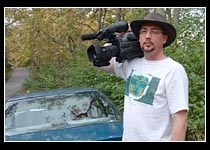 Owen:
Your directorial effort from 1995, 'Creep',
chronicles a killing spree of a pair of sibling
serial killers. It caused such a stir that before
it was released to video stores 25 minutes of the
film was cut...First off, did you have any say
regarding the edited material and secondly what
were the primary areas of focus that were causing
problems with distribution?
Owen:
Your directorial effort from 1995, 'Creep',
chronicles a killing spree of a pair of sibling
serial killers. It caused such a stir that before
it was released to video stores 25 minutes of the
film was cut...First off, did you have any say
regarding the edited material and secondly what
were the primary areas of focus that were causing
problems with distribution? Tim: I
think I wrote Unreel so other aspiring
moviemakers could see...and hopefully feel...what
a difficult choice it is to become a 'moviemaker'
with absolutely no backup plans. This is what I
did, and as much as I was able to 'pursue my
dreams', there were more times than not when I
was just living a nightmare, so that was what I
was hoping to convey, even though it may not be
as bad as that sounds. The point is, lots of
times we don't 'make it' the way we thought we
would, things don't work out the way we planned.
For every Quentin Tarantino success story, there
are thousands of aspiring hopefuls out there
still working in those video stores, struggling.
There's no health insurance offered in the indie
scene. There's very little money to be made, in
reality, unless you have a one in a million 'Halloween'
style success----which akin to winning the
lottery, in reality. Most unlikely. So I wanted
to tell this story...to give this warning...in
the best way I could, from my own experiences.
Plus it was fun putting all the crazy stuff down
I had gone through. These days, more and more of
the people who are 'fans' of the kind of movies I
make are going out there and doing it themselves
with digital cameras and computer editing...and
the market is unfortunately getting smaller and
smaller. From my experiences, there's also this
incredible kind of ruthless behavior in the movie
world that goes along with an extreme prejudice
from Hollywood against what we are doing. You can
read about it all you want, but until you
experience it first-hand, you can't imagine what
a letdown it is, emotionally, when all these
negative cards keep falling into place. You get
ripped off by wholesalers. Tarred and feathered
by ‘highbrow’ critics. And no one in
Hollywood will take you seriously if you say you
shot a feature movie on video, it’s
still the kiss of death despite successes like Blair
Witch and Open Water.
All the while you’re working a menial labor
job you hate and struggling with family and bill
issues. (And no, I'm not trying to say every
critic should love your movie, but there’s
nothing like a little salt in the wounds to add
insult to injury! You have to develop a thick
skin to stay focused on the dream.) I tried to
explain what all that's like, almost being
snuffed out financially while you pursue this
'calling' you feel, when every time it looks like
your ship is going to come in...things go all
Titanic on you! So if anything, I hope that this
book will help aspiring artists think about
backup plans to make money and take care of their
families concurrently with pursuing their
moviemaking goals. It actually took me years to
figure out how to write 'Unreel'
and not make it too depressing. I felt all my
life experiences were leading up to a book, but I
just didn't know how or when it would evolve. I
wanted to get everything and the kitchen sink in
there and fortunately, I keep a daily diary of
sorts, I've done that since 1980, so I read
through everything I had documented, all these
experiences and emotions in thousands and
thousands of pages (which took about eight months
to do!), and I was able to capture things pretty
accurately. It was an interesting experience,
really, being able to take myself out of what I
had actually lived through, and see things almost
neutrally, from a third party perspective, as
just the writer or person documenting it all, if
you will. It really made me see a lot of the
mistakes I had made in a new light---it became
clear to me how wrong I had been in so many of my
choices. Ultimately it proved pretty humbling and
cathartic, as it led me through to that age-old
question we all have for ourselves, 'what is the
purpose of life' and all that, even if it sounds
cliche...
Tim: I
think I wrote Unreel so other aspiring
moviemakers could see...and hopefully feel...what
a difficult choice it is to become a 'moviemaker'
with absolutely no backup plans. This is what I
did, and as much as I was able to 'pursue my
dreams', there were more times than not when I
was just living a nightmare, so that was what I
was hoping to convey, even though it may not be
as bad as that sounds. The point is, lots of
times we don't 'make it' the way we thought we
would, things don't work out the way we planned.
For every Quentin Tarantino success story, there
are thousands of aspiring hopefuls out there
still working in those video stores, struggling.
There's no health insurance offered in the indie
scene. There's very little money to be made, in
reality, unless you have a one in a million 'Halloween'
style success----which akin to winning the
lottery, in reality. Most unlikely. So I wanted
to tell this story...to give this warning...in
the best way I could, from my own experiences.
Plus it was fun putting all the crazy stuff down
I had gone through. These days, more and more of
the people who are 'fans' of the kind of movies I
make are going out there and doing it themselves
with digital cameras and computer editing...and
the market is unfortunately getting smaller and
smaller. From my experiences, there's also this
incredible kind of ruthless behavior in the movie
world that goes along with an extreme prejudice
from Hollywood against what we are doing. You can
read about it all you want, but until you
experience it first-hand, you can't imagine what
a letdown it is, emotionally, when all these
negative cards keep falling into place. You get
ripped off by wholesalers. Tarred and feathered
by ‘highbrow’ critics. And no one in
Hollywood will take you seriously if you say you
shot a feature movie on video, it’s
still the kiss of death despite successes like Blair
Witch and Open Water.
All the while you’re working a menial labor
job you hate and struggling with family and bill
issues. (And no, I'm not trying to say every
critic should love your movie, but there’s
nothing like a little salt in the wounds to add
insult to injury! You have to develop a thick
skin to stay focused on the dream.) I tried to
explain what all that's like, almost being
snuffed out financially while you pursue this
'calling' you feel, when every time it looks like
your ship is going to come in...things go all
Titanic on you! So if anything, I hope that this
book will help aspiring artists think about
backup plans to make money and take care of their
families concurrently with pursuing their
moviemaking goals. It actually took me years to
figure out how to write 'Unreel'
and not make it too depressing. I felt all my
life experiences were leading up to a book, but I
just didn't know how or when it would evolve. I
wanted to get everything and the kitchen sink in
there and fortunately, I keep a daily diary of
sorts, I've done that since 1980, so I read
through everything I had documented, all these
experiences and emotions in thousands and
thousands of pages (which took about eight months
to do!), and I was able to capture things pretty
accurately. It was an interesting experience,
really, being able to take myself out of what I
had actually lived through, and see things almost
neutrally, from a third party perspective, as
just the writer or person documenting it all, if
you will. It really made me see a lot of the
mistakes I had made in a new light---it became
clear to me how wrong I had been in so many of my
choices. Ultimately it proved pretty humbling and
cathartic, as it led me through to that age-old
question we all have for ourselves, 'what is the
purpose of life' and all that, even if it sounds
cliche... Tim: First, I wish to quote someone who recently
reviewed ‘Reconciled’
on a website. I don’t know the man, but his
name is Jack Seney, and one of the things he said
in his review about Christianity really resonated
with me as well. He said, ‘As I am someone
who has been freed from multiple gutter-level
addictions by Christ and who has studied the
historical evidence for Him extensively, there is
no one who can convince me that He is not the eternal Savior for human souls.’ I
couldn’t agree with Mr. Seney more and have
been through the exact same experience, but for
me personally, I sometimes find this truth
intensely difficult to personally live up to. I
am afraid of temptation and how truly easy it is
to backslide in your moral standings or forget
God in this busy and sometimes selfish world we
live in, so that, to me, is kind of scary.
It’s something I personally have to work on
every day. These are things that constantly sneak
up behind you, like a silent killer with a knife,
if you will. It’s very much like what the
Apostle Paul stated somewhere in the New
Testament, and my loose interpretation of it is
‘the more good I try to be, the more I am
able to see how truly corrupt I am inside, and I
end up sinning again, exactly what I don’t
want to be doing.’ One has to stay focused
on their beliefs and God’s principles, and
it’s so easy to be caught off guard.
It’s all too simple to pray to God only when
you want something like a promotion or a loved
one to get better if they’re sick…but
so easy to forget that communication on just an
everyday basis, thanking Him for your well-being,
your family, pets, food, a roof over your head
and all the things we generally take for granted
in life. So I now really try to keep that in
perspective and communicate every day, which is
something so simple…yet so complicated, at
the same time.
Tim: First, I wish to quote someone who recently
reviewed ‘Reconciled’
on a website. I don’t know the man, but his
name is Jack Seney, and one of the things he said
in his review about Christianity really resonated
with me as well. He said, ‘As I am someone
who has been freed from multiple gutter-level
addictions by Christ and who has studied the
historical evidence for Him extensively, there is
no one who can convince me that He is not the eternal Savior for human souls.’ I
couldn’t agree with Mr. Seney more and have
been through the exact same experience, but for
me personally, I sometimes find this truth
intensely difficult to personally live up to. I
am afraid of temptation and how truly easy it is
to backslide in your moral standings or forget
God in this busy and sometimes selfish world we
live in, so that, to me, is kind of scary.
It’s something I personally have to work on
every day. These are things that constantly sneak
up behind you, like a silent killer with a knife,
if you will. It’s very much like what the
Apostle Paul stated somewhere in the New
Testament, and my loose interpretation of it is
‘the more good I try to be, the more I am
able to see how truly corrupt I am inside, and I
end up sinning again, exactly what I don’t
want to be doing.’ One has to stay focused
on their beliefs and God’s principles, and
it’s so easy to be caught off guard.
It’s all too simple to pray to God only when
you want something like a promotion or a loved
one to get better if they’re sick…but
so easy to forget that communication on just an
everyday basis, thanking Him for your well-being,
your family, pets, food, a roof over your head
and all the things we generally take for granted
in life. So I now really try to keep that in
perspective and communicate every day, which is
something so simple…yet so complicated, at
the same time.